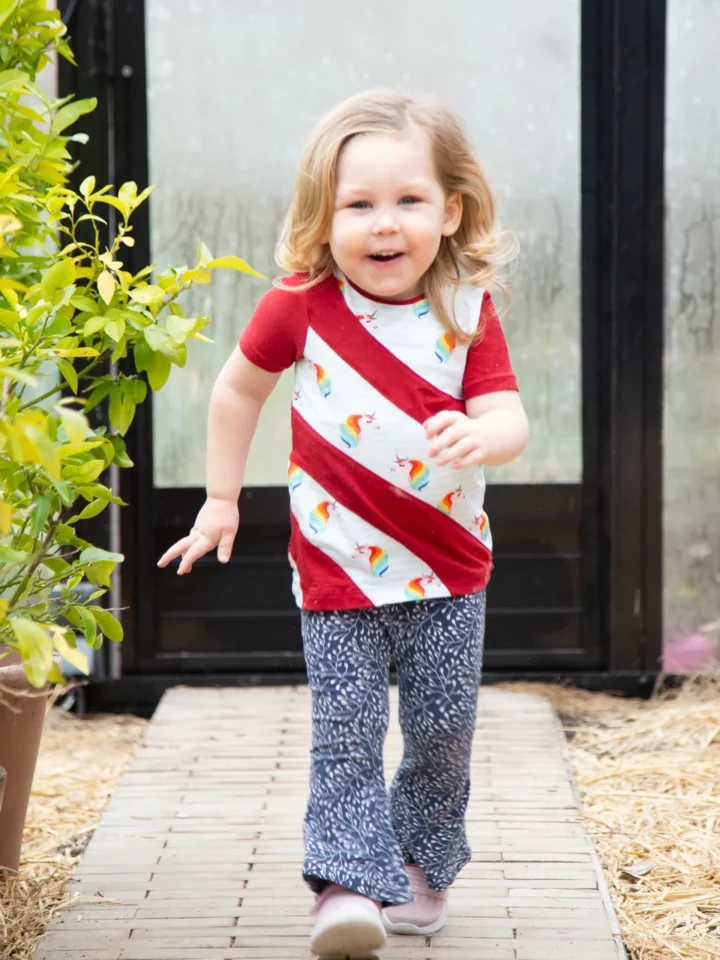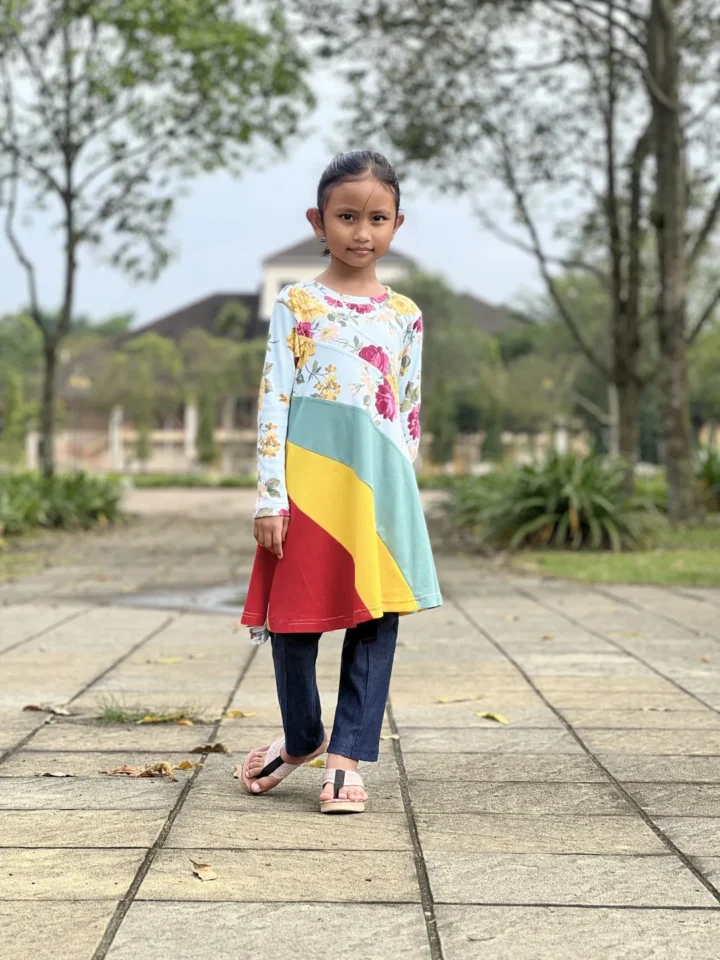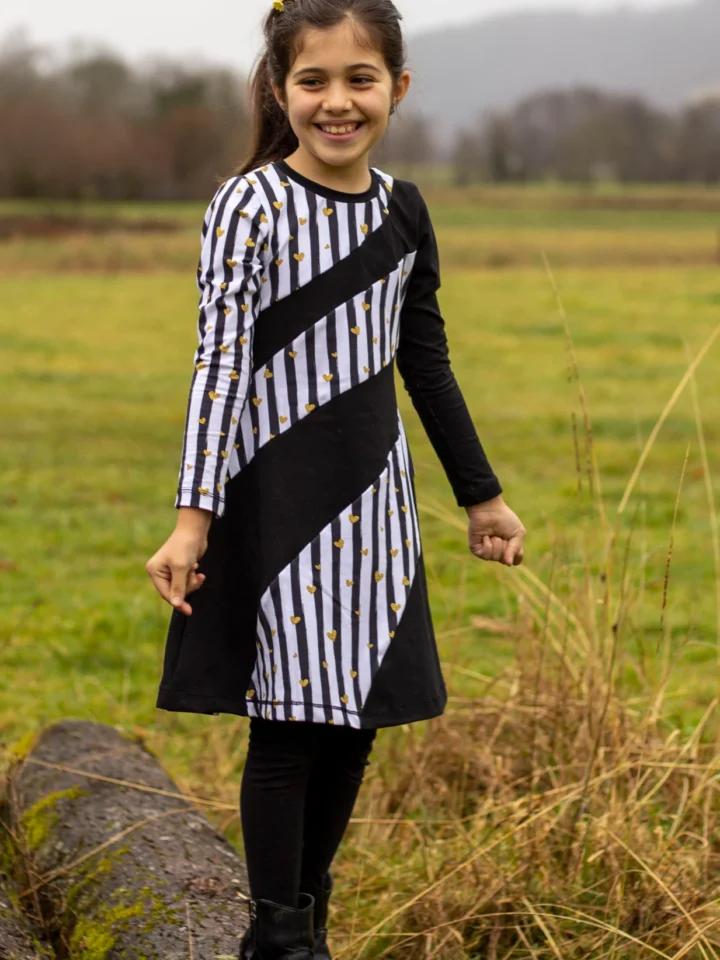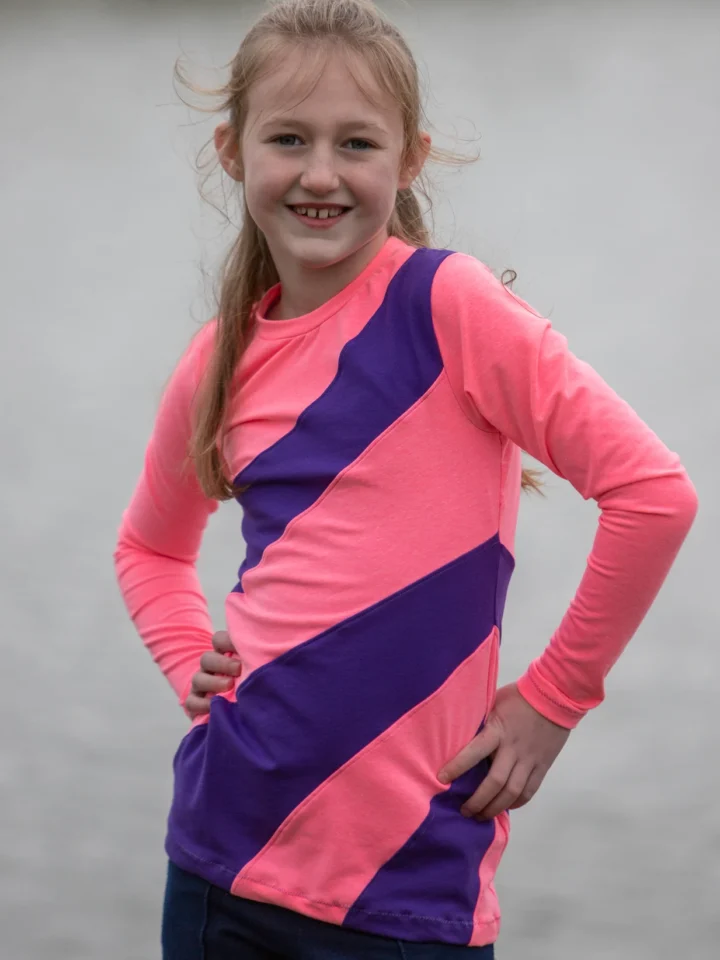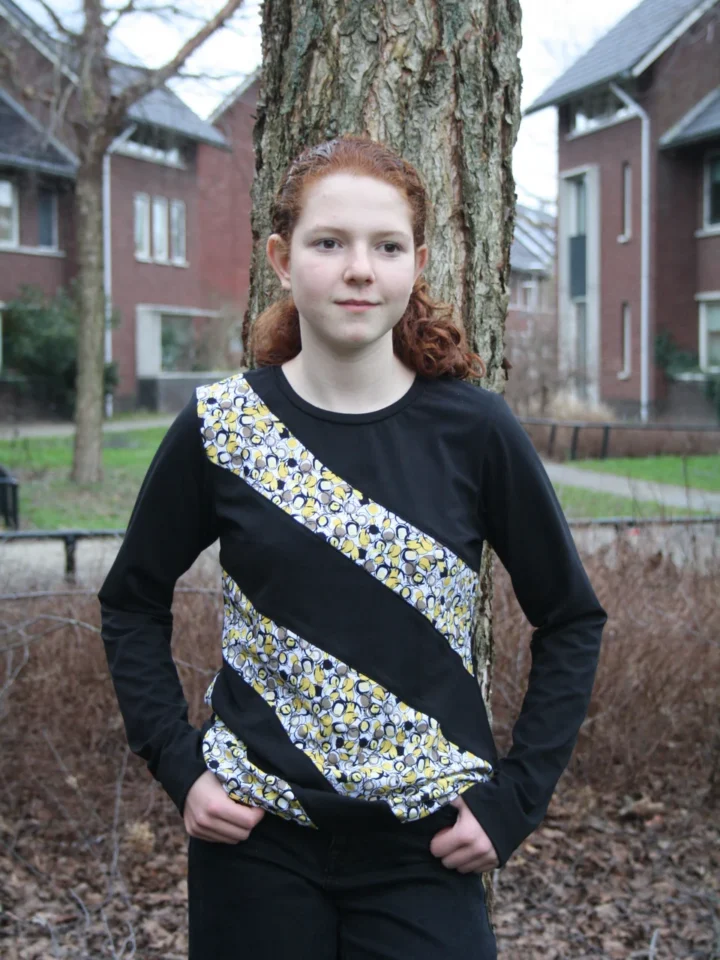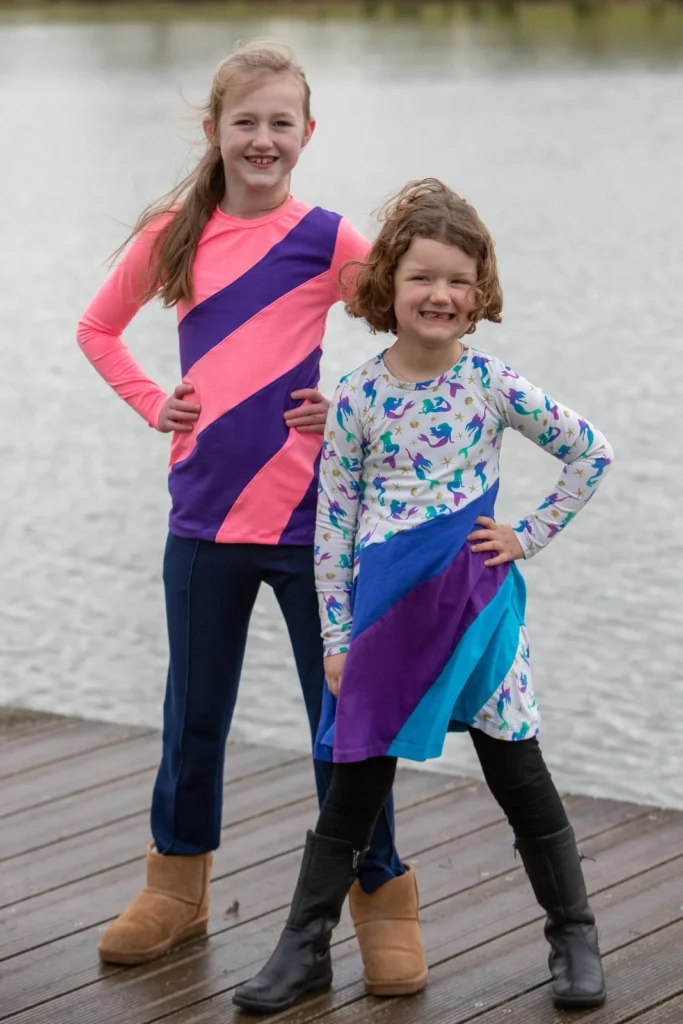
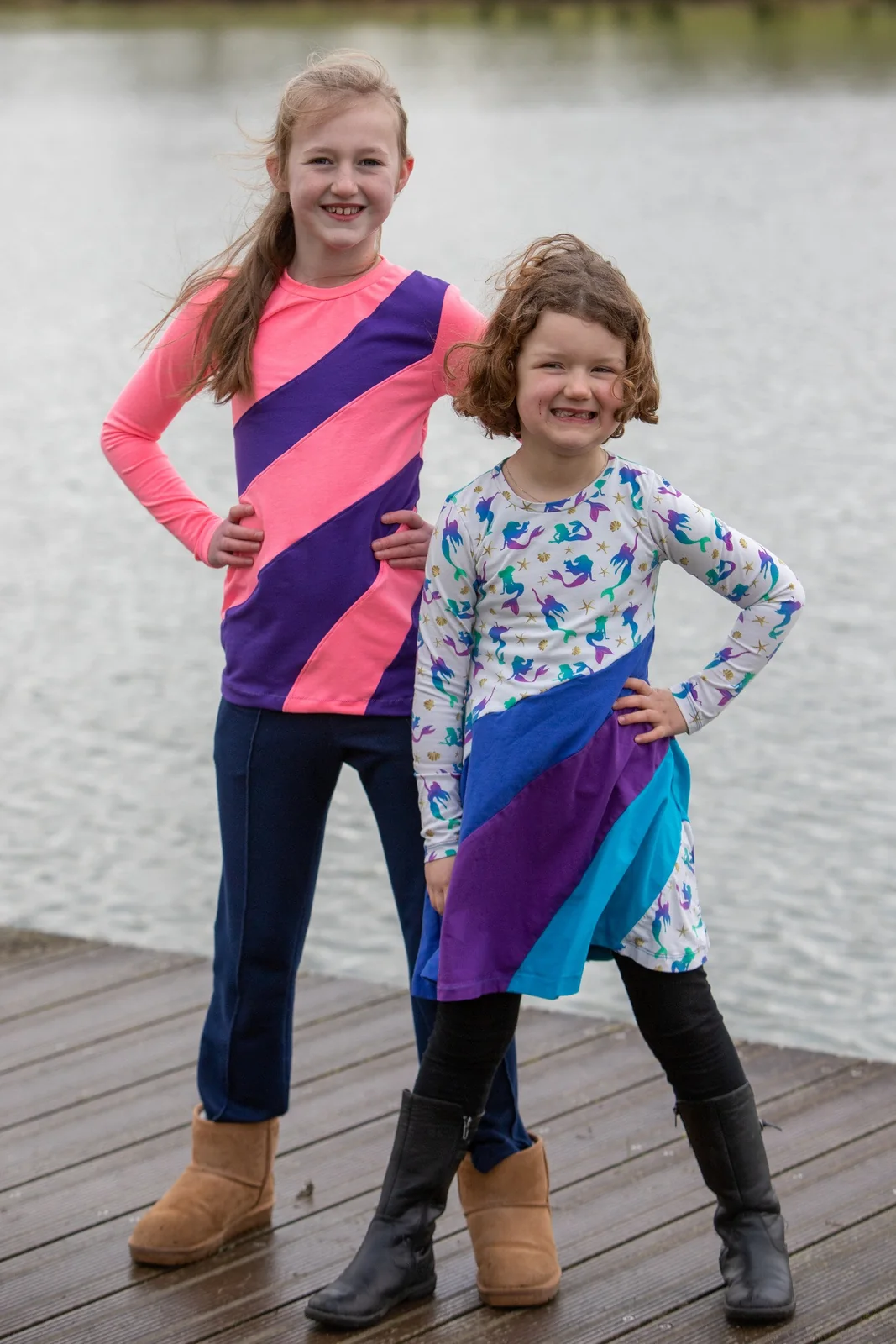
One Calyra dress and two shirts show three ways to use the same curved colourblocking. Suzanne Knoop – den Adel’s photographs bring together a mermaid print, bright pink and purple, and small flowers with teal and muted rose.
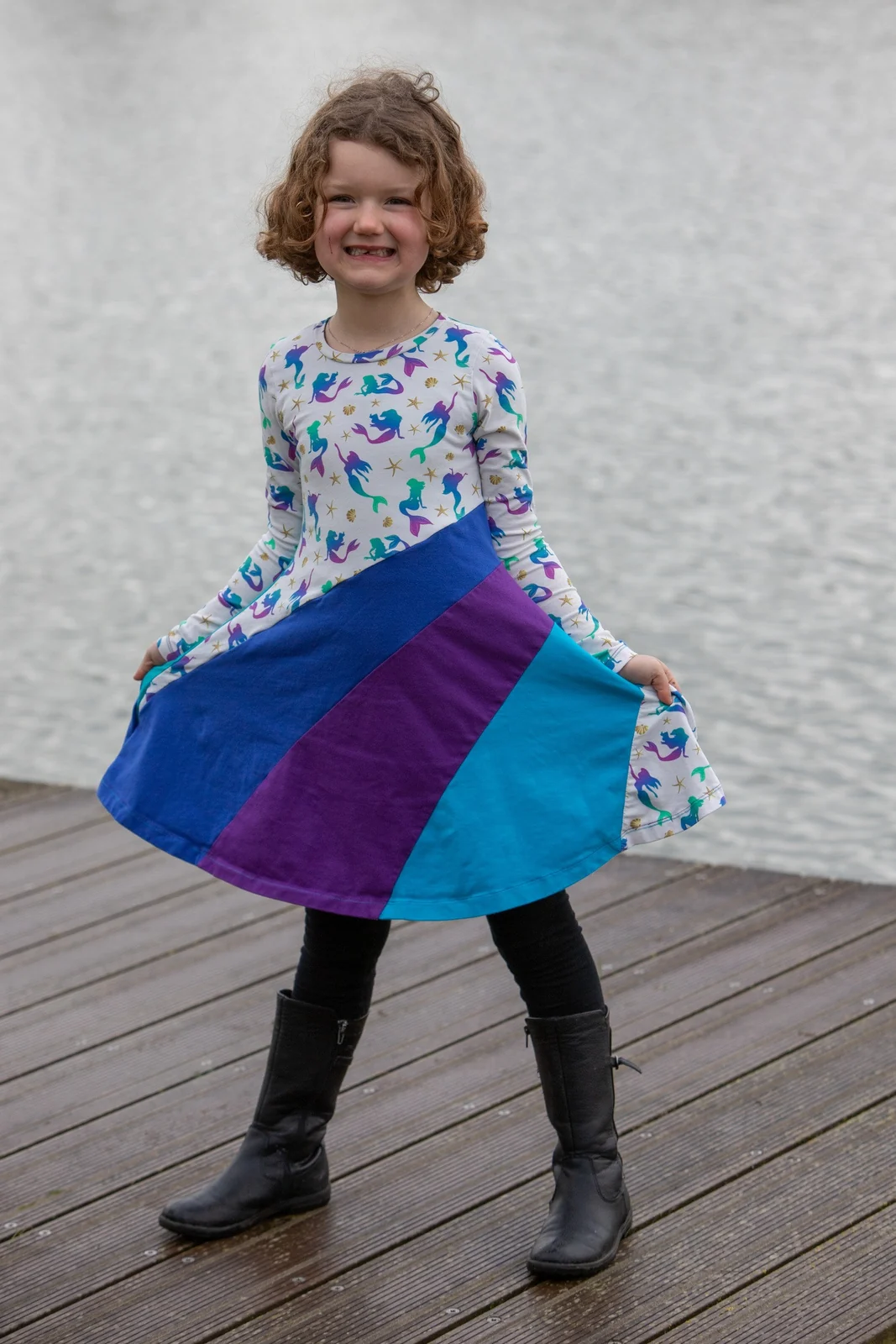
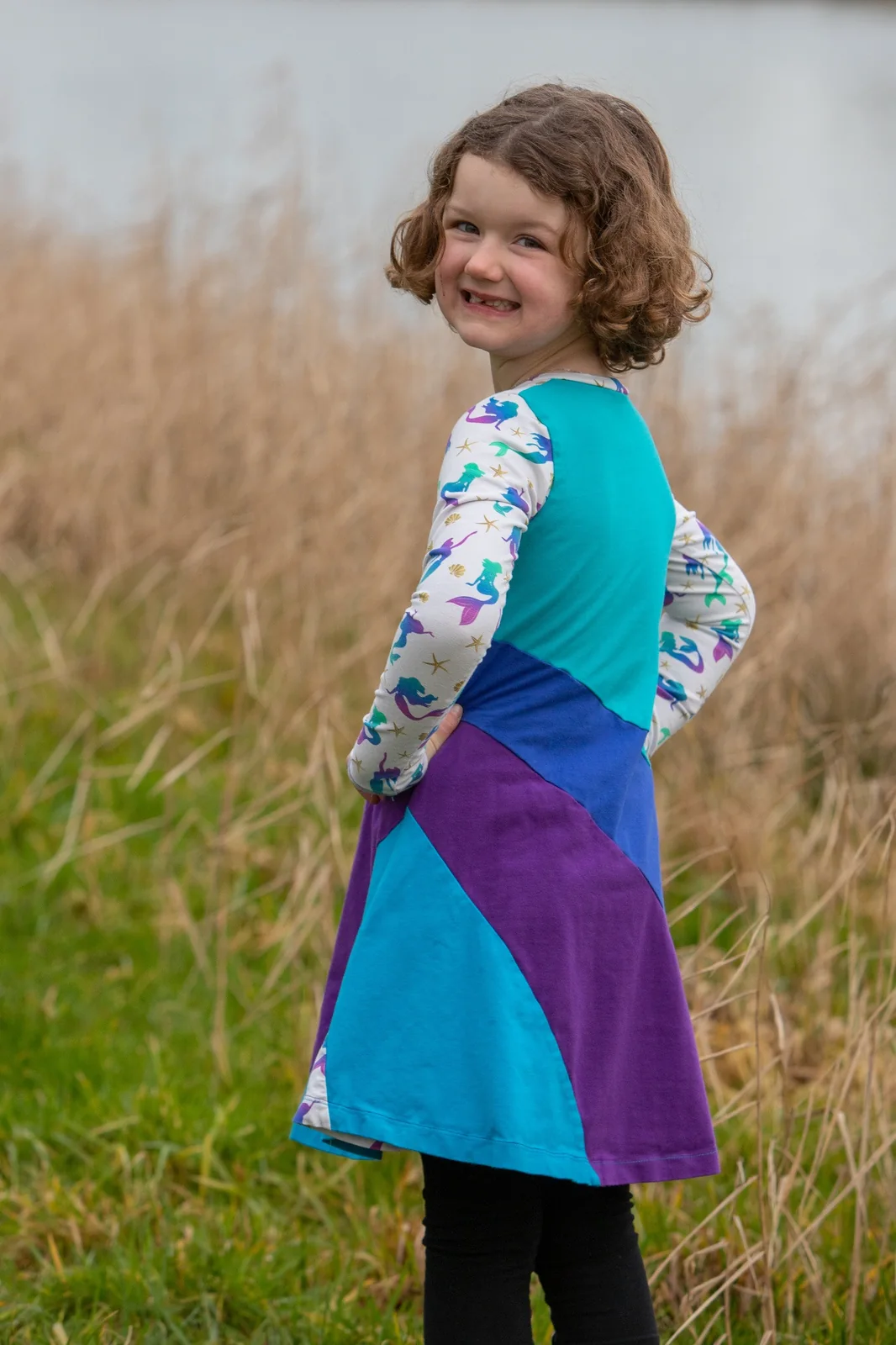
A mermaid dress with sweeping colourblocks
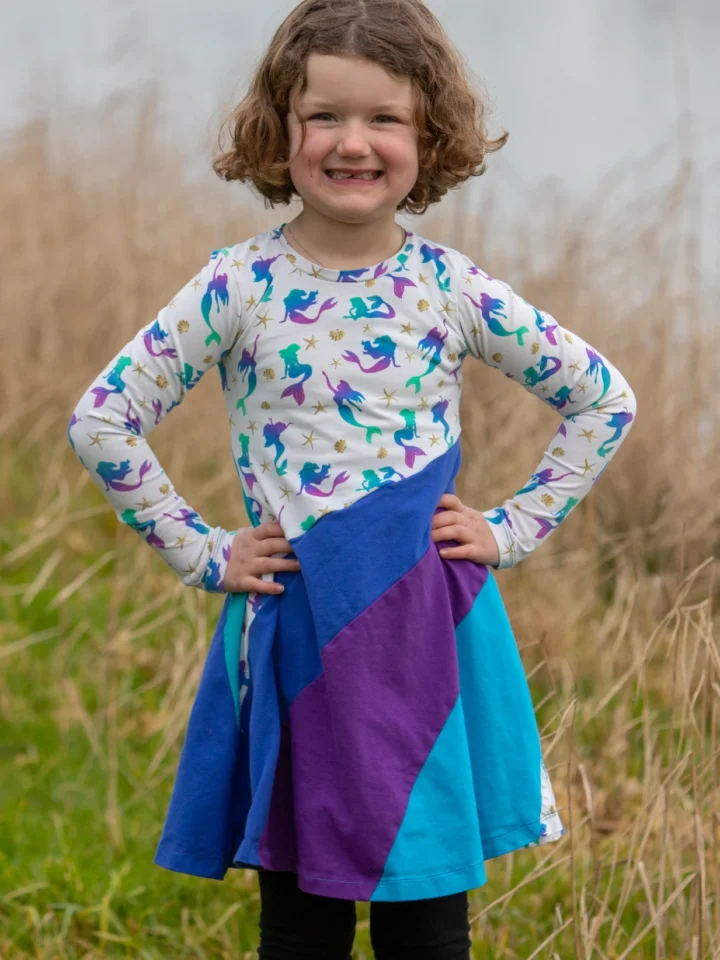
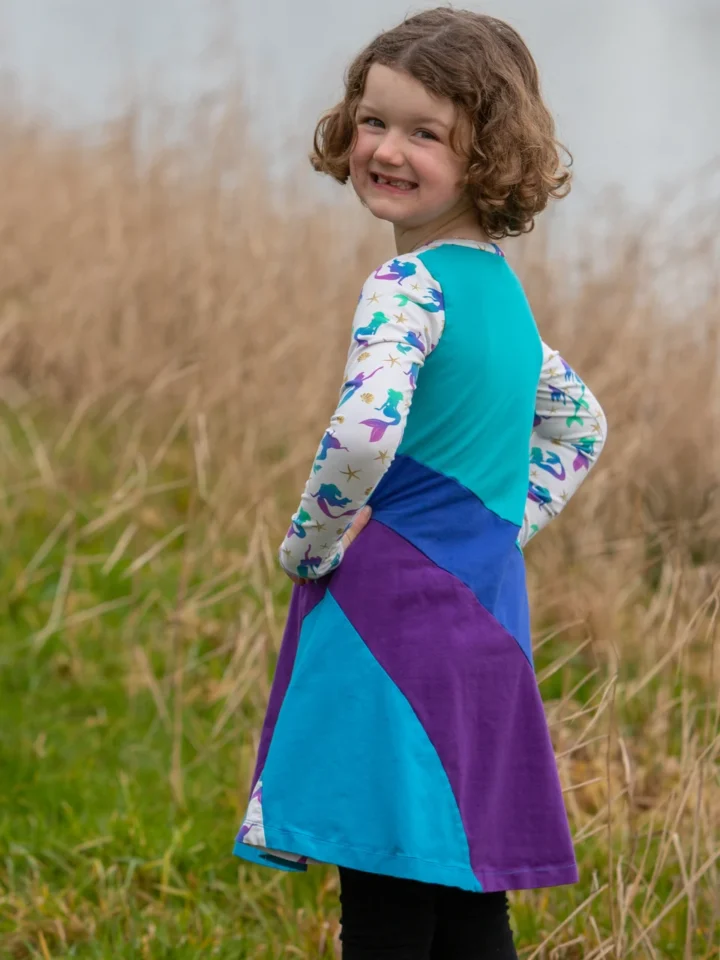
A pale mermaid print covers the upper front and long sleeves. Blue, purple and turquoise carry those colours into the flared skirt. Holding the skirt out makes the broad curved sections especially easy to see.
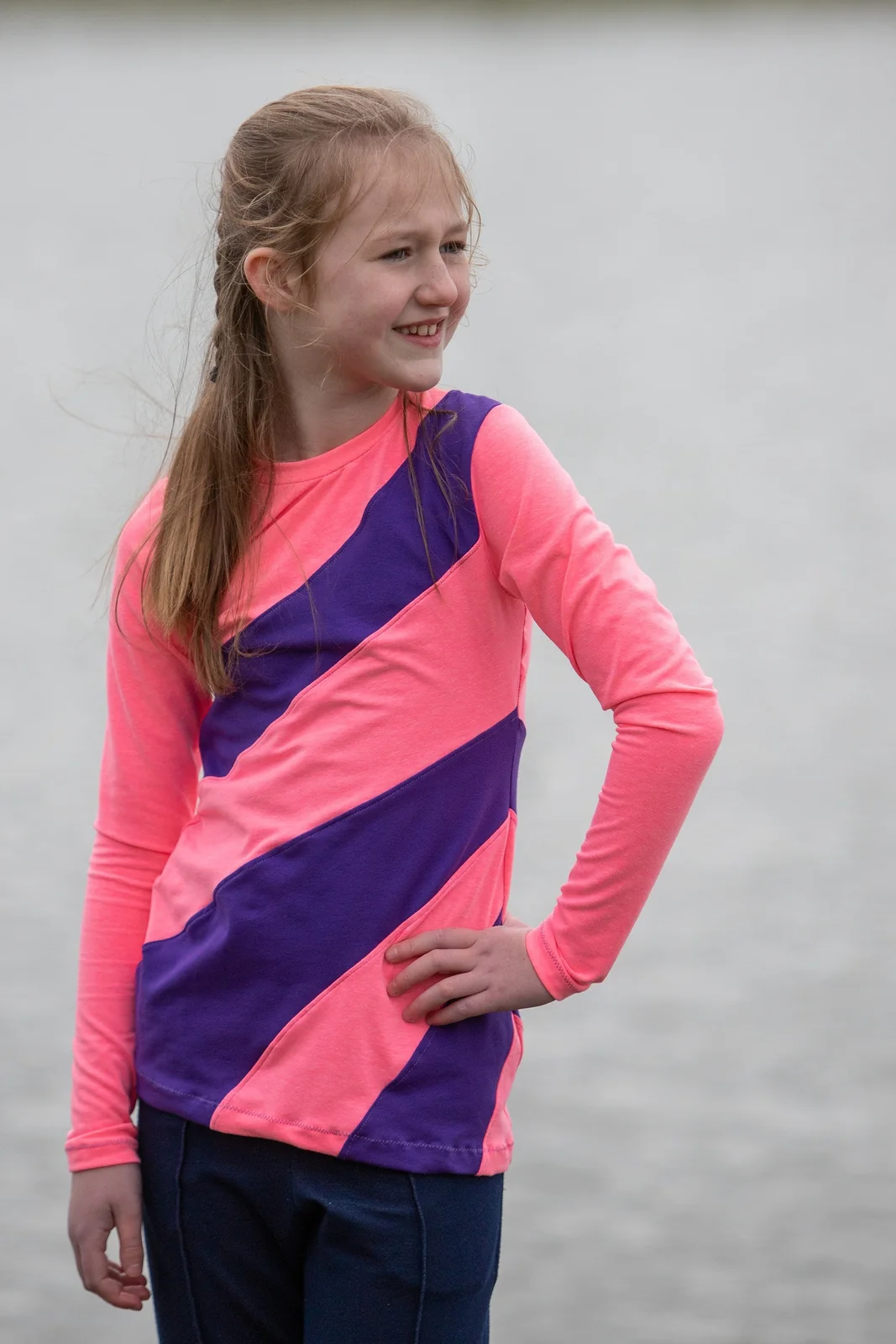
Pink and purple without a print
The bright shirt uses two plain colours, putting the curved seams at the centre of the design. Pink sleeves repeat one of the front colours. The shirt length gives the same colourblocking a different silhouette beside the longer dress.
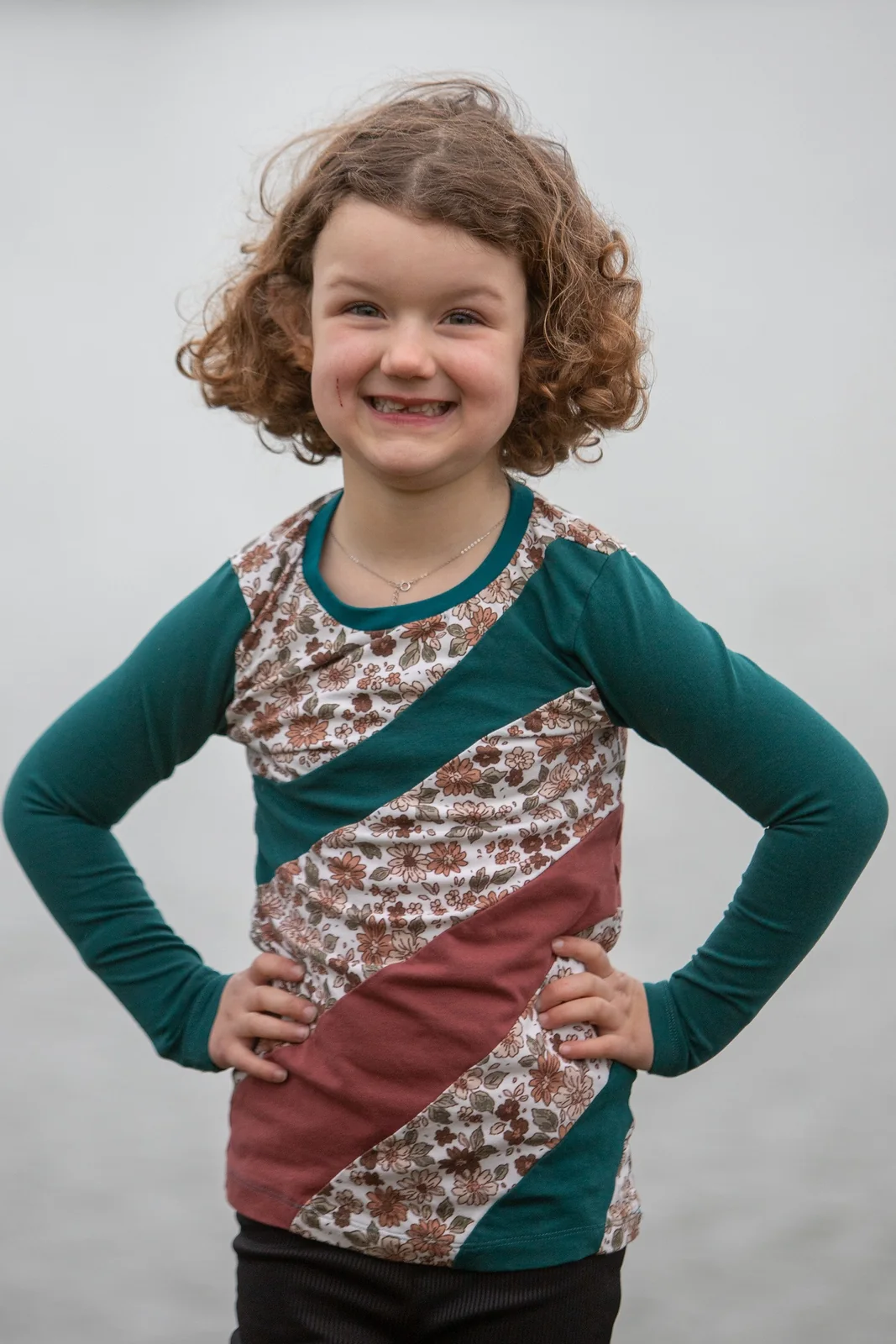
Small flowers with teal and rose
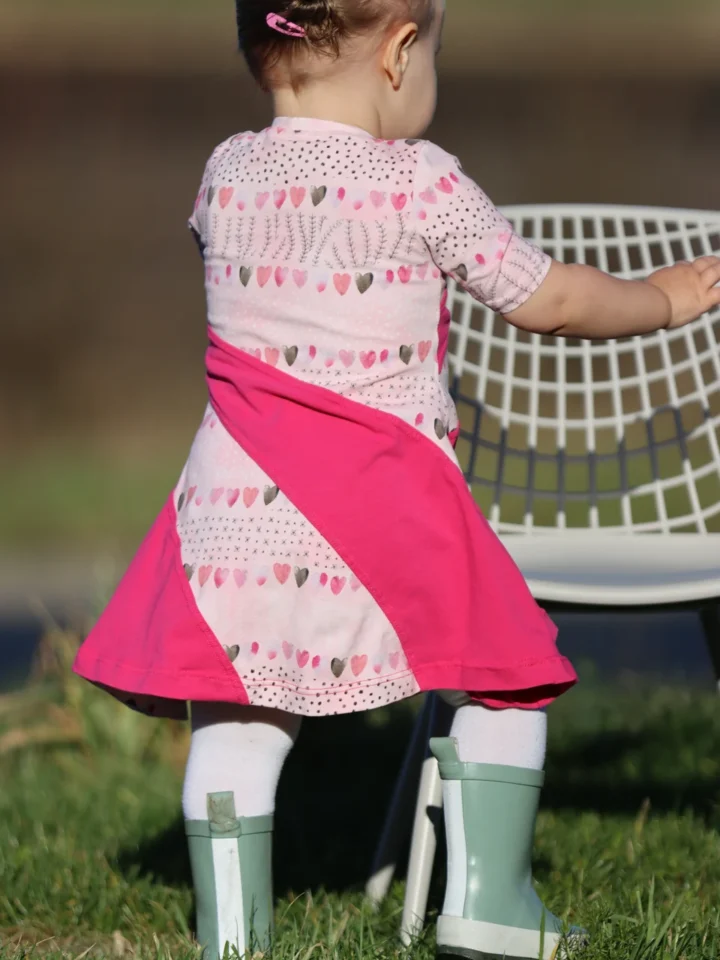
The second shirt combines a pale floral print with teal sleeves, a matching neckband and muted rose panels. The smaller flowers add detail while the plain sections keep the curved lines clear.
Plan the back as well as the front
On the mermaid dress, turquoise fills the upper back and blue and purple continue through the skirt. Laying out the whole colour plan before cutting helps you decide where to repeat a colour and where to change it.
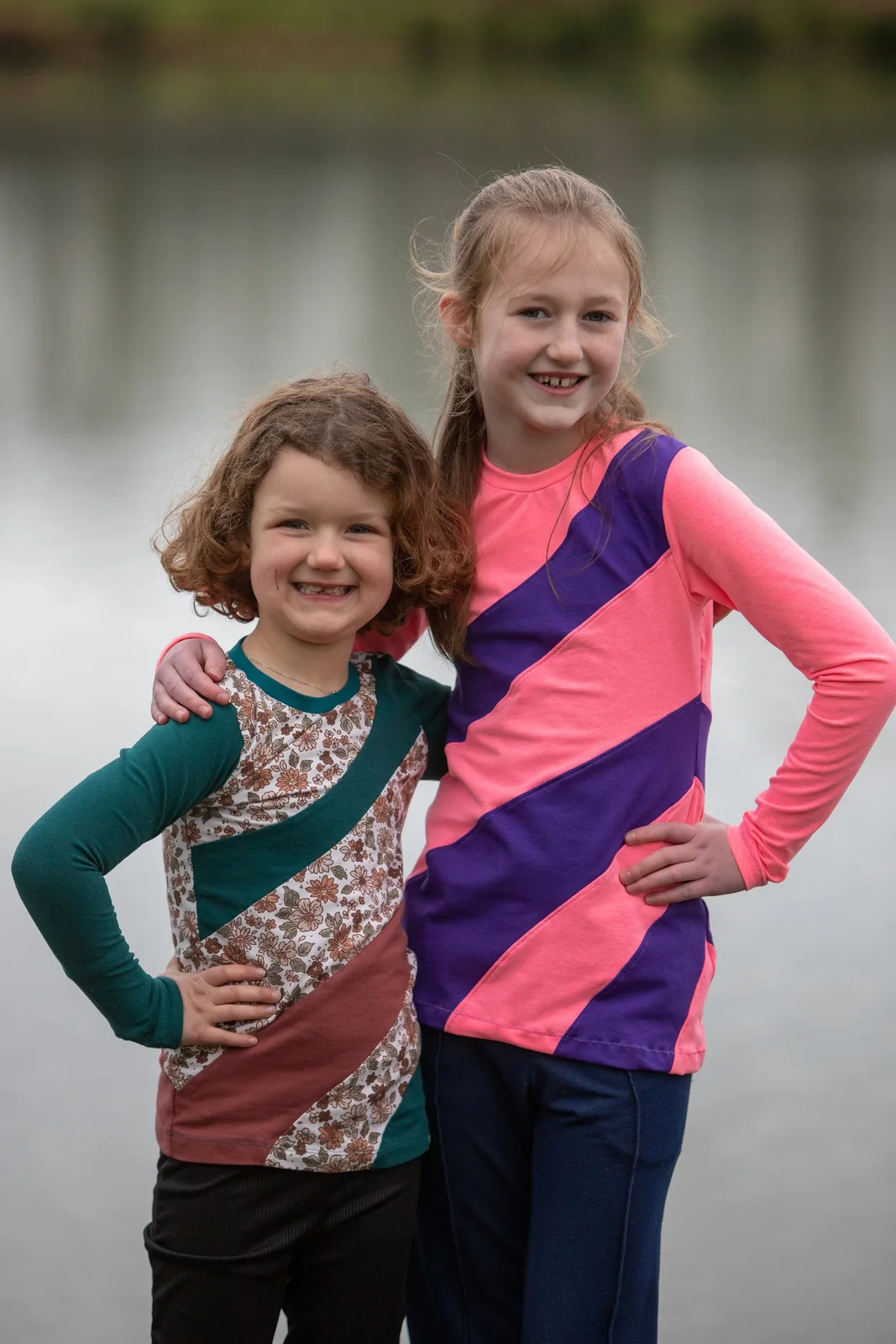
Let the fabric combination change the look
These examples use colour, print scale and garment length in different ways. Repeat a colour from a print in the plain sections, or put two strong solids beside each other to emphasise the design lines. The two shirts look connected through their shared Calyra shape while keeping different palettes.
Choose compatible knits
The Calyra instructions recommend medium-weight knits with at least 30% stretch. Compare the weight, stretch and recovery of the fabrics you intend to join, and sew a curved test seam if their behaviour differs. The photographed prints are colour inspiration; check the properties of your own fabrics before cutting.
Explore the shirt and dress options · Compare fabric types · Measure stretch and recovery