
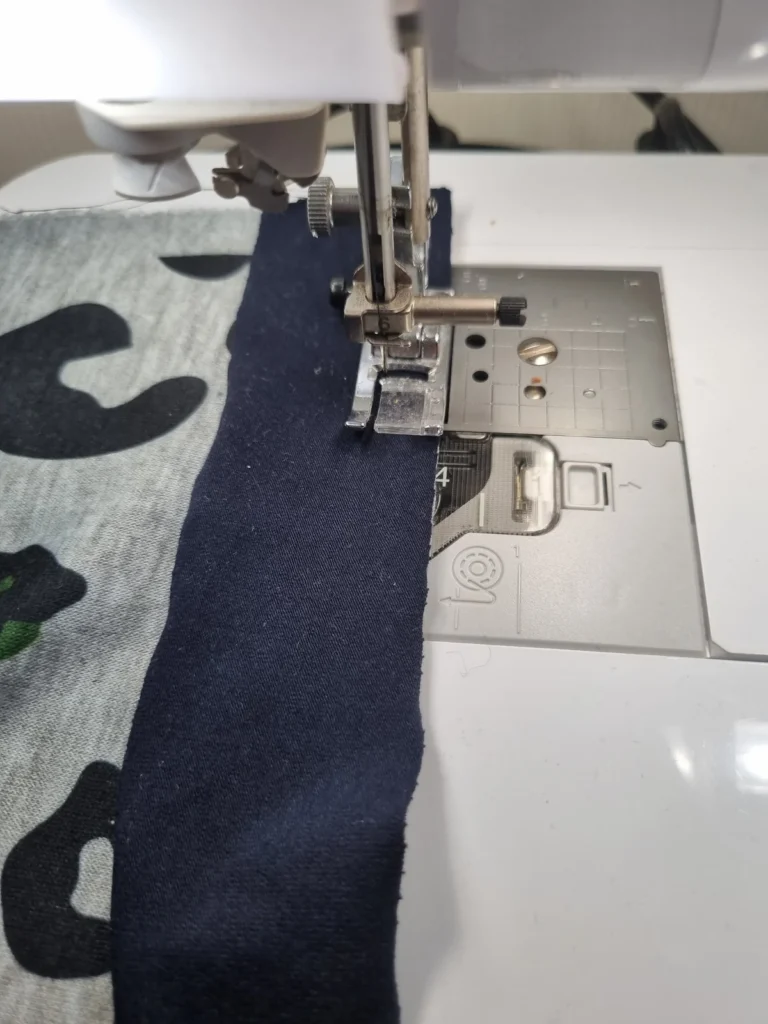
Jersey makes comfortable children’s clothing, but it can be frustrating when the neckline waves or the hem twists. Most of the time, small changes to how you handle the fabric make a significant difference.
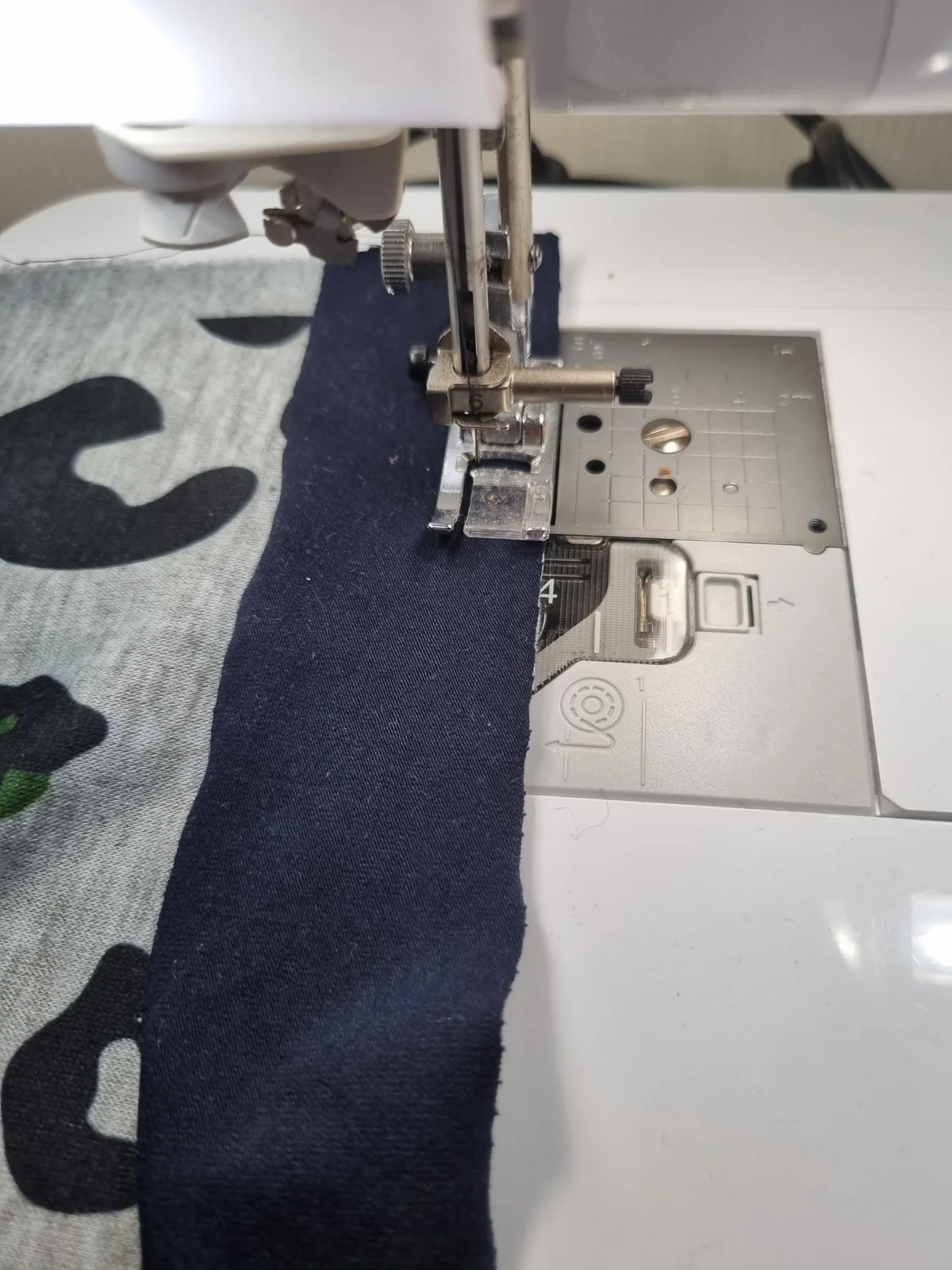
Use an appropriate needle
A ballpoint or stretch needle is often a good starting point for knit fabric. Needle choice depends on the fabric and machine: test stitches on scraps before sewing the real garment.
Choose a stitch that can stretch
A narrow zigzag, stretch stitch or overlocker seam can move with the garment. A straight stitch that cannot stretch enough may snap at high-movement areas.
Do not pull the seam
Support the fabric before and after the presser foot and let the machine feed it. Pulling can stretch the knit and produce a rippled seam. A walking foot or differential feed may help if the machine offers those options.
Stabilise only where needed
Shoulder seams, neck openings and other areas may benefit from clear elastic or appropriate stay tape when the pattern recommends it. The aim is to control distortion, not to remove all the garment’s stretch.
Press with care
Use the correct temperature for the fibre content and press rather than dragging the iron. Steam and a pressing cloth can help settle a wavy seam, but test on a scrap first.
Frequently Asked Questions
Why is my jersey neckline wavy? It may have stretched while sewing or been cut with a binding that is too long for the fabric.
Can I sew jersey on a normal machine? Yes, using suitable needles and stitches.